
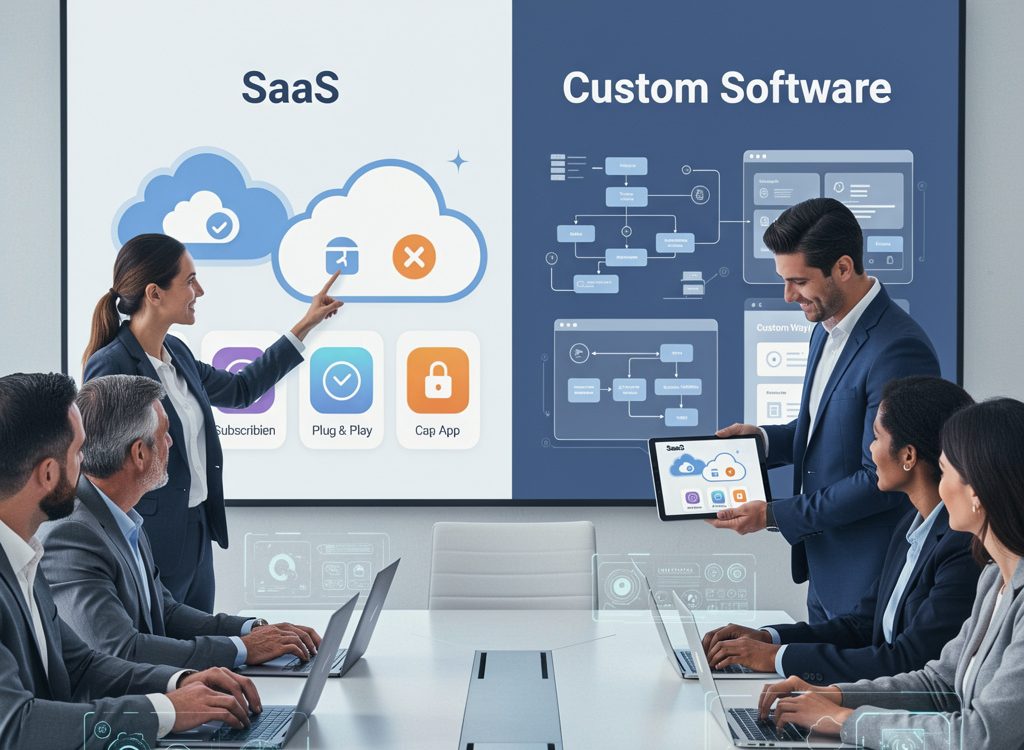
As businesses continue to embrace digital transformation in 2026, choosing the right software solution has become more important than ever. One of the most common decisions companies face is whether to invest in custom software development or use a Software as a Service (SaaS) platform.
Both options offer unique advantages, but the right choice depends on your business goals, budget, scalability requirements, and operational needs. Understanding the differences can help you make a smarter long-term investment.
What Is SaaS?
Software as a Service (SaaS) refers to cloud-based applications that are developed and managed by third-party providers. Businesses pay a monthly or annual subscription fee to access the software online.
Popular examples include customer relationship management tools, project management platforms, accounting software, and communication applications.
Benefits of SaaS
Quick Implementation
SaaS platforms can often be deployed within hours or days, allowing businesses to start using them immediately.
Lower Initial Costs
Since there is no need for custom development, businesses can avoid large upfront investments and pay predictable subscription fees instead.
Automatic Updates
The provider handles maintenance, security updates, and feature improvements, reducing the burden on internal teams.
Proven Reliability
Established SaaS solutions are tested across thousands of businesses and typically offer stable performance.
Limitations of SaaS
While SaaS offers convenience, it may not always fit unique business processes.
Common limitations include:
- Limited customization options
- Ongoing subscription costs
- Dependence on third-party providers
- Restricted control over features and functionality
- Potential integration challenges
As businesses grow, these limitations can become more noticeable.
What Is Custom Software?
Custom software is designed and developed specifically for your business requirements. Instead of adapting your operations to fit existing software, the software is built around your workflows, objectives, and processes.
Custom solutions can include CRM systems, ERP platforms, inventory management software, business automation tools, customer portals, and industry-specific applications.
Benefits of Custom Software
Tailored To Your Business
Every feature is developed according to your exact needs, creating a solution that aligns perfectly with your operations.
Greater Scalability
Custom software can evolve as your business grows, allowing new features and integrations to be added over time.
Competitive Advantage
Unique software can provide capabilities that competitors using standard SaaS platforms may not have.
Enhanced Efficiency
Automating specific workflows and eliminating unnecessary features often improves productivity and reduces manual work.
Full Ownership
You maintain control over the software, data, and future development roadmap.
Challenges of Custom Software
Custom development typically requires:
- Higher initial investment
- Longer development timelines
- Ongoing maintenance and support
- Strategic planning and requirements gathering
However, many businesses view these costs as long-term investments rather than expenses.
Which Option Is Right for Your Business?
The answer depends on your current needs and future goals.
Choose SaaS If:
- You need a solution quickly
- Your processes are relatively standard
- Budget is a primary concern
- You prefer minimal maintenance responsibilities
- You are testing a new business idea
Choose Custom Software If:
- Your business has unique workflows
- You require advanced automation
- Existing SaaS tools cannot meet your needs
- Scalability is a priority
- You want full control over features and data
The 2026 Business Trend
Many businesses are now adopting a hybrid approach. They use SaaS tools for common functions while investing in custom software for critical operations that directly impact efficiency, customer experience, and growth.
This strategy allows organizations to balance affordability, flexibility, and innovation while maintaining a competitive edge.
Final Thoughts
There is no one-size-fits-all answer when choosing between custom software and SaaS. SaaS solutions offer speed and convenience, while custom software provides flexibility, scalability, and long-term value.
The best choice depends on where your business is today and where you plan to be tomorrow. By carefully evaluating your goals, processes, and growth plans, you can invest in a solution that supports sustainable success in 2026 and beyond.